Nuclear sustainability services
OPG has an entire division with over 350 employees, known as Nuclear Sustainability Services (NSS), dedicated to managing nuclear waste. Working in accordance with all regulations from the Canadian Nuclear Safety Commission (CNSC) and the International Atomic Energy Agency (IAEA), OPG safely handles and manages nuclear waste at three sites in the province.
How much waste is there?
The highest radioactive materials – fuel bundles used in the reactors – make up about 3% of the nuclear waste handled by OPG. It’s the tip of the tip of a pyramid. Intermediate-level waste accounts for 7% of total waste generated, while the bulk of the pyramid – around 90% – is made up of low-level waste.
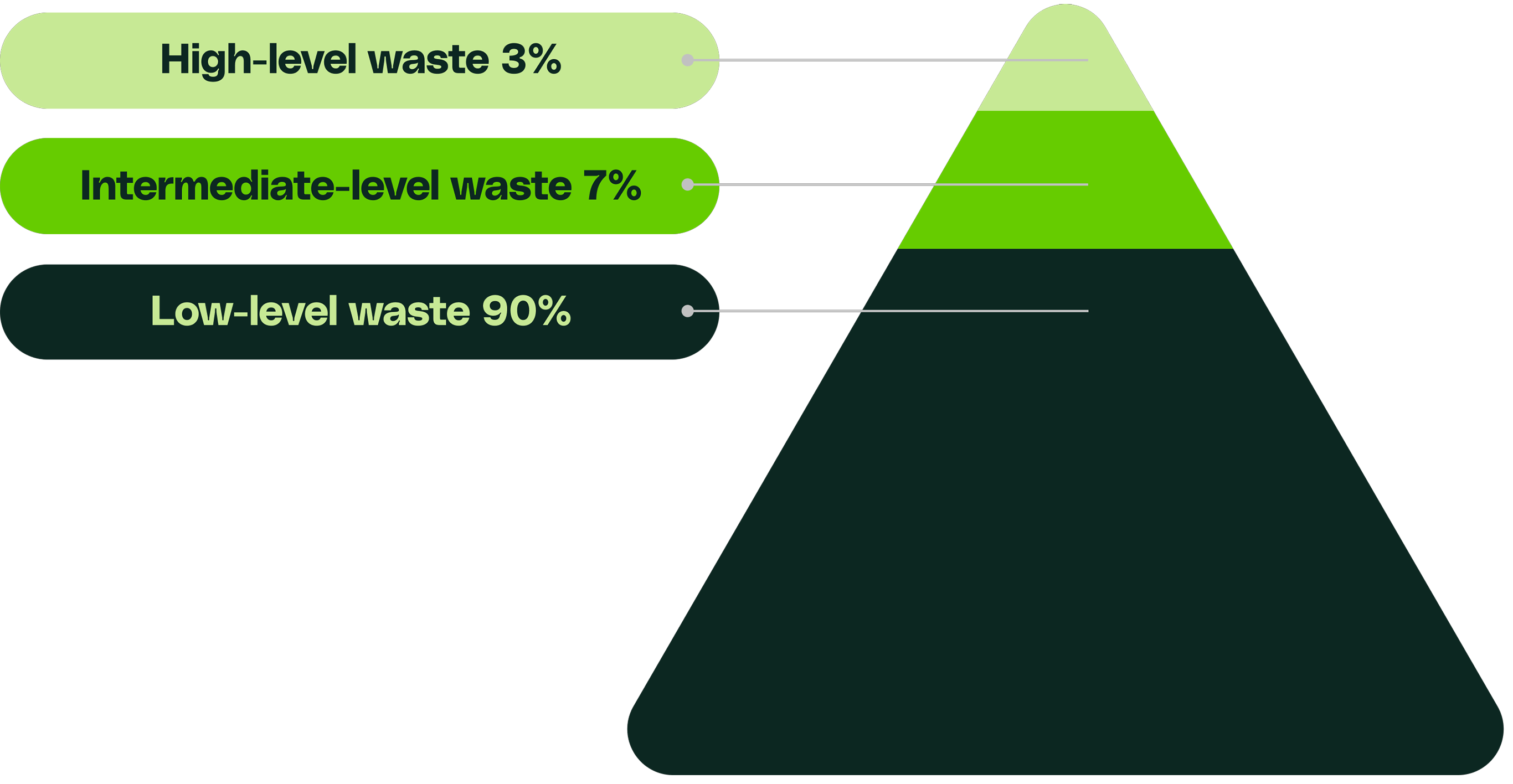
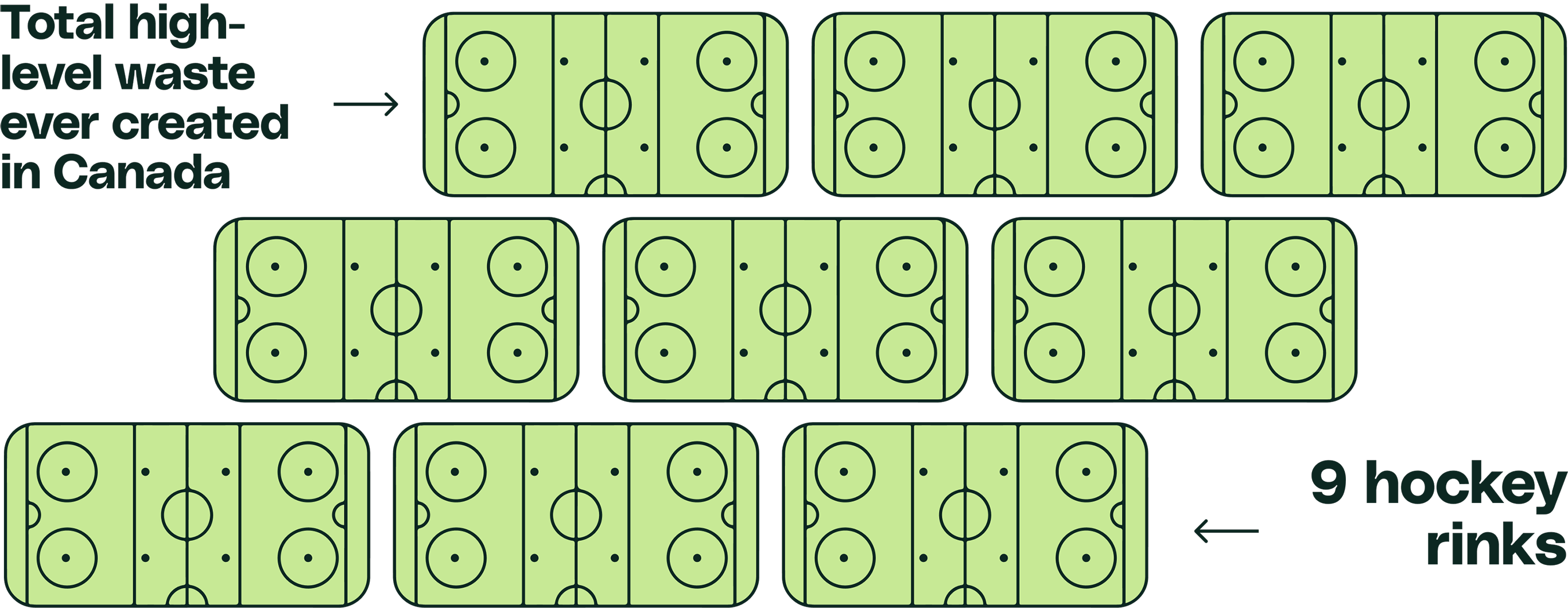
To put this into real numbers, high-level waste is measured in fuel bundles. Each bundle is about the size of a log of wood and provides enough electricity to power a home for 100 years. From the early 1960s and the arrival of nuclear power generation in Canada until 2023, there have been approximately 3.5 million used fuel bundles created. To visualize this, imagine an NHL hockey rink filled from the ice to the top of the boards. All the high-level waste ever created in Canada would fill about nine hockey rinks.
OPG waste facilities
All OPG waste facilities operate under a Waste Facility Operating Licence (WFOL) and are regulated by the CNSC. This licence is separate from those of nuclear generating stations and is accompanied by its own unique set of regulations to ensure the safety of the public, the environment, and all our employees. For more information, please visit our Operating Licences page.
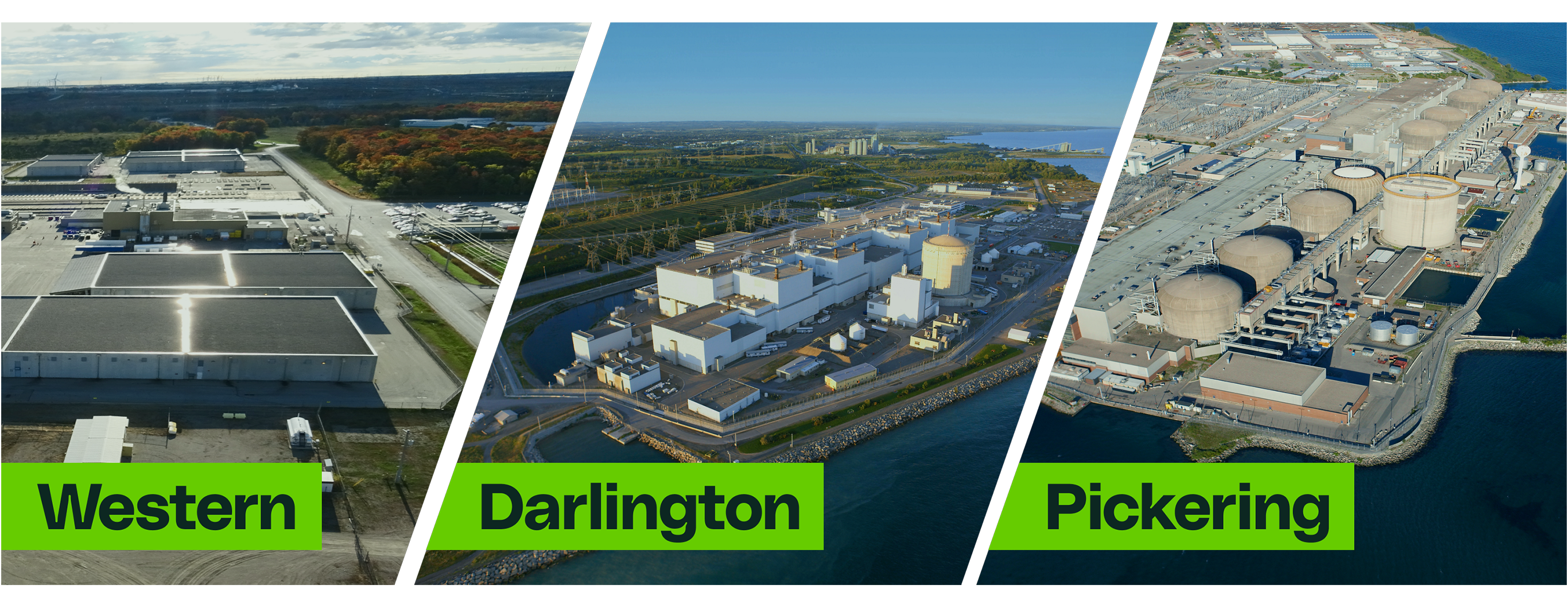
The Western Waste Management Facility (WWMF) handles low- and intermediate-level waste from the Darlington, Pickering, and Bruce Power nuclear stations. In addition, all used fuel from the beginning of operations at Bruce Power right up to today are safely stored at the WWMF. After sorting and segregation, low-level waste is reduced in volume through incineration and compaction. This is all part of an ongoing effort to keep the low-level waste storage footprint as small as possible. The WWMF is home to Canada’s only licensed incinerator for radioactive materials.
The Darlington Waste Management Facility (DWMF) has been in operation since 2005. It is located at the Darlington Nuclear Generating Station and is used to store used fuel from the Darlington reactors along with some intermediate-level waste from the station’s ongoing refurbishment. The Darlington facility also takes in and securely stores nuclear waste from hospitals and labs across Ontario.
The Pickering Waste Management Facility (PWMF) is located at the Pickering Nuclear Generating Station. The used fuel bundles from Pickering are stored there along with some intermediate-level materials from previous work on the reactors.
Management of low-level waste

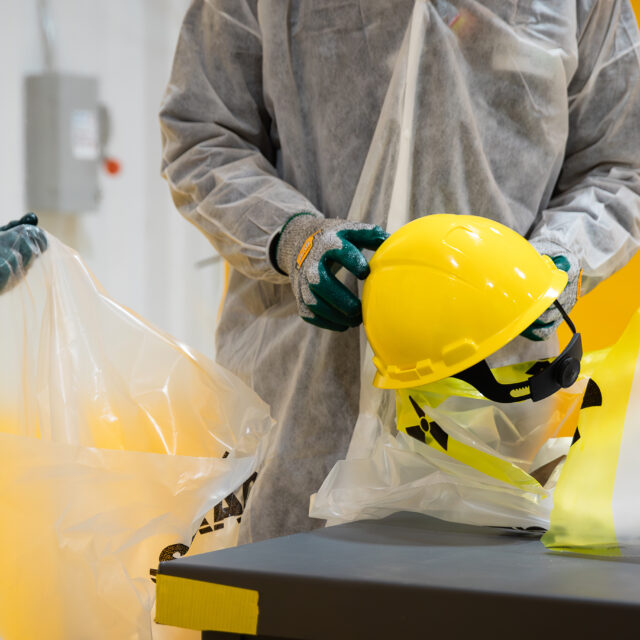
Of the total volume of nuclear waste, around 90% is made up of materials with minimal levels of radioactivity. Things like mops, rags, small tools, and protective clothing used by OPG employees during routine operations are carefully managed. That management begins with a strong focus on both prevention and reduction.
The easiest waste to manage is the waste that was never created in the first place. To that end, excess packaging and any unneeded materials are removed before components are brought into controlled areas closer to the reactor.
Low-level waste is secured in CNSC-licensed steel-lined packages and stored at our Western Waste Management Facility (WWMF). There, it is processed and either incinerated or compacted to reduce volume. The remaining materials—mostly ash—are safely stored onsite in concrete warehouses. The effort of our NSS team is resulting in significant reductions of stored low-level waste volumes. The management and disposal of low-level waste is fully funded upfront for its entire lifecycle.
Management of intermediate-level waste
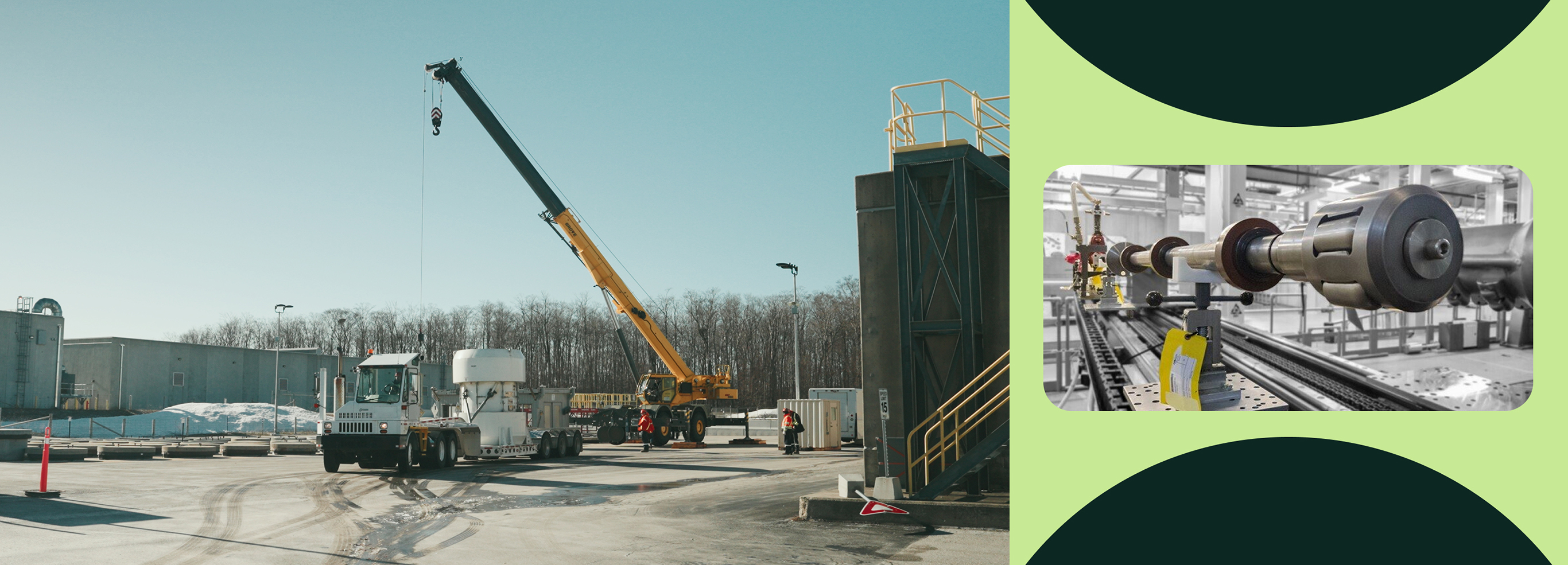
Representing smaller volumes but higher levels of radioactivity, intermediate-level waste consists of items that will retain their radioactivity for periods longer than a few hundred years. This category of waste includes resins, filters, refurbishment waste, and other items from nuclear stations that have been upgraded or replaced as part of ongoing maintenance.
OPG’s NSS team carefully handles these materials, loading them into specially reinforced CNSC-licensed shielded packages before placing them into steel-lined in-ground storage containers and closely monitoring as the radioactivity safely decays.
Management of high-level waste
High-level waste is often referred to as used or spent fuel. Representing about 3% of OPG’s total waste volume, this category consists of the uranium-dioxide ceramic pellets—the fuel that CANDU nuclear reactors run on—and the materials they’re surrounded with. These pellets are sealed in tubes which are welded together to create fuel bundles. After 12 to 18 months of energy production, it’s time to replace the highly radioactive used fuel bundles from the reactor core with new ones. The used fuel bundles are carefully handled, contained, and managed for the long term.
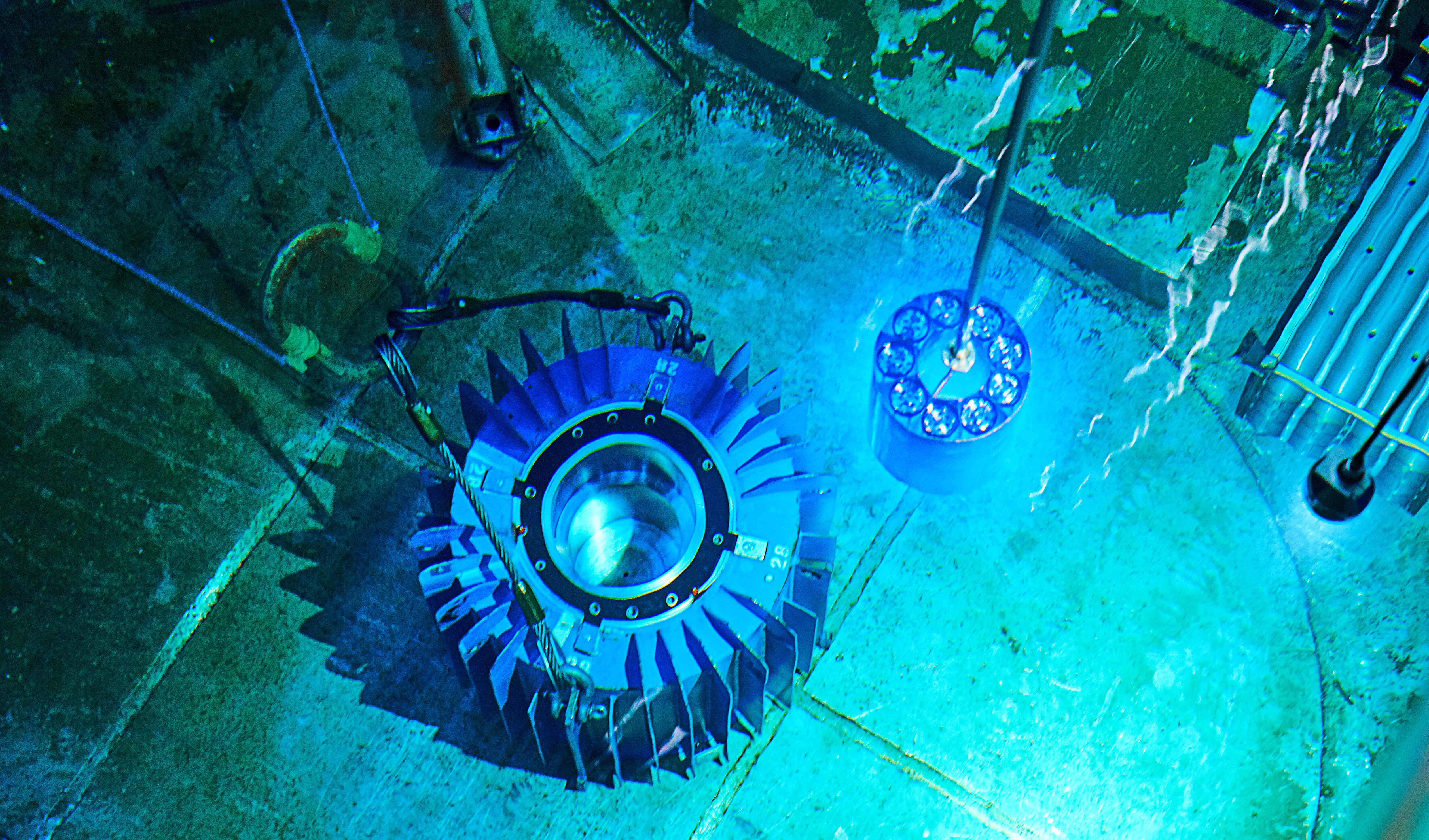
After being removed from the reactor, the bundles are first stored underwater in specially designed and reinforced cooling bays for a period of six to 10 years. The walls and floors of these pools are two metres thick and made of reinforced concrete. Heat resistant and water-tight liners add another level of protection. These storage bays are also visited in-person by IAEA and CNSC certified inspectors and remotely monitored by the IAEA at all times.
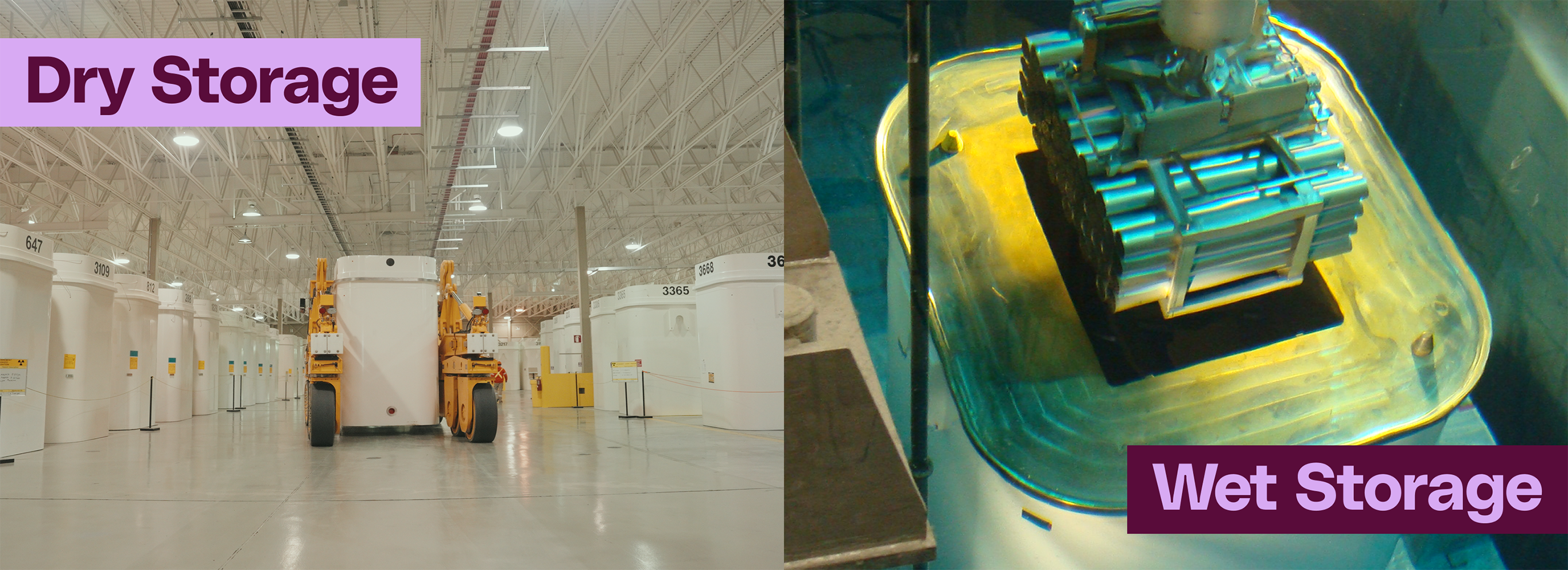
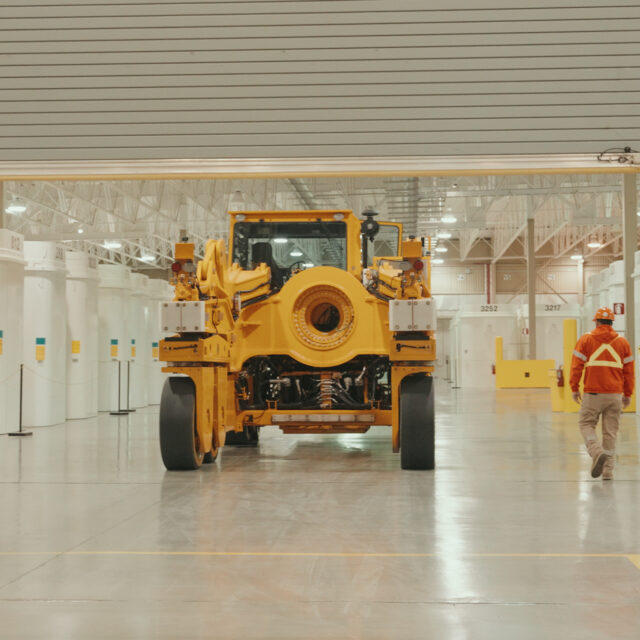
After the period in wet storage, the fuel bundles are extracted from the pools and stored in specially designed dry storage containers. Each container holds 384 fuel bundles in reinforced concrete between interior and exterior layers of carbon steel. The containers are filled with helium to prevent oxidation. Once sealed, they remain on-site in interim storage at one of OPG’s three waste management facilities where they remain under continuous monitoring.
As part of Canada’s 2002 Nuclear Fuel Waste Act, used fuel transportation and long-term management fall under the responsibility of Canada’s Nuclear Waste Management Organization (NWMO). The NWMO is responsible for designing and implementing Canada’s plan for the long-term management of used nuclear fuel including building sustainable long-term solutions for the future. To that end, they’re working towards the creation of a Deep Geological Repository in Ontario.
Transportation of nuclear waste and other radioactive materials
For over 50 years, OPG has safely transported radioactive materials within the province. Movement of low- and intermediate-level nuclear waste and other radioactive materials is a systematic and secure process. Everything is planned and every kilometre closely monitored. Our NSS team loads all materials in specially reinforced and shielded packages licensed by the Canadian Nuclear Safety Commission (CNSC). All vehicles, packages, and safety equipment are regularly inspected and strictly adhere to the International Atomic Energy Agency (IAEA) regulations for the safe transport of radioactive materials. And OPG operates in accordance with all regulatory bodies governing Class 7 Transportation of Dangerous Goods in Canada.

Subscribe and stay informed
Sign up to receive the latest news, project updates, and event information from OPG.